
“Design is about envisioning and designing what we don´t know we need”........
npflint

An image developed with AI based on my 3D sketches of my project called WORLDBY - see more here
It all started when ……………………………………………… THE SENSUSTAINABLE DIMENSION
Following is yet another attempt to define SENSUSTAINABILITY - a “book-project” - pages on constant revision and development - and will always be. Recently I have started developing with MORPHO or GPDRCHAT - a new AI model from Denmark based on solely european developed AI language models. Link here to GPDRCHAT - There's a European alternative to ChatGPT: https://gdprchat.eu/join/2537
My intention here is first and foremost to inspire - NOT to write a novel or anything else - however yes it all might end up as a book. The pages here is a mishmash of many different formats, forms, thoughts, ideas, visions etc. It more like a collage or catalogue and its primerally right now my personal notes making the / a book project which currently has the workingtitle THE SENSUSTAINABLE DIMENSION.
In this process I am as mentioned earlier working with MORPHO or GPDRCHAT - my prompts are of course based on years and decades of experience and Im using MORPHO as an assistent but also as editor etc. to make sense in a lot of the thousands of ideas flickering around in my brain.
At some point it might make sense for others - right now its probably mostly chaos, but I keep it as an open and honest process - first of all in order to invite various people to have a look and not always have to send an entire volume - here I can send links to individual chapters / ideas / texts etc. - and here you can see the context, which is always changing.
TOPICS CURRENTLY BEING DEVELOPED

Seneste version .17.8.2026
Platform for MICROISM - DEN BÆREDYGTIGT-SENSUELLE FREMTID The SSF - THE SENSUSTAINABLE FUTURE / DIMENSION
The ELEMENTS / THE TOPICS
“ONLY THE NOTION RESOURCES EXIST in THE FUTURE – THE WORD WASTE IS A MISUNDERSTOOD NOTION DEVELOPED TO MAKE HUMANS CONSUME AND NOT LIVE AS PART OF NATURE – AMONG ANIMALS AND NATURE THERE IS NO WASTE – ONLY RESOURCES”.
NPF

the ETERNITY model
The composting world - eternity forever
– historier om hvordan vi kunne ændre vore toiletvaner og spare ikke kun ressourcer, men også blive sundere etc.
o Bogen om kompost toiletter – THE DECENTRALIZED SUSTAINABLE COMPOST TOILET SYSTEMS (2017 / 2018)
§ WWCdo Tower Pres NP-ML.ppt [Read-Only]
§ WWCdo Paris
DIVINE FOOD
- Vores sundere mad der skaber sundere ekskrementer, der skaber bedre gødning og gas og sidst men ikke mindst bedre og sundere grøntsager, animalske produkter etc. –
- DIVINE DINNER – det skønne mad på skønne borde serveret – at ”spise og spice med øjnene kan være 50% af et måltid” – det mætter at spise smukt

AqUA – CULTURE
- VAND som ikke kun en ressource, men som planeten eller systemets ”blod” – det livgivende og samtidigt dødelige element, vi som mennesker ikke kun består af, men som vi heller ikke kan leve uden uanset hvordan vi skaber nye verdener
o VAND & BADE HUSENE – på mange måder som romernes gamle bade – steder hvor mennesker møder vand og vand møder mennesker
MERDE MAGIQUE
- The magic around divine humane feces & urine – unrecognized resources in a time of resource depletion, matters which can be turned into gold – almost – or at least be used for some useful rather than considered waste.
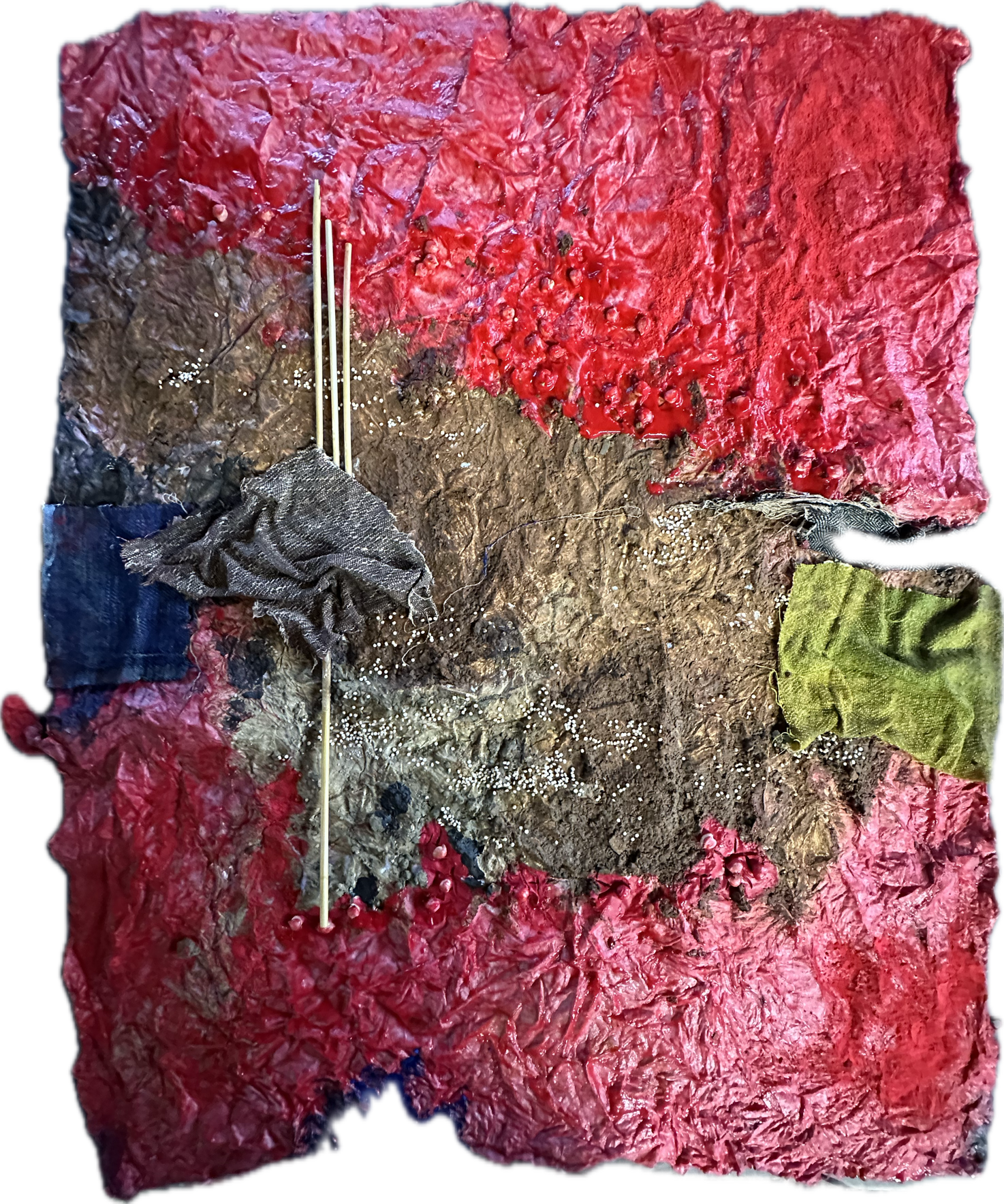
MERDE MAGIQUE artwork - “make it your wallhanging - or start your garden” NPF
MOVE - TRANSPORT
- De nye måder at tænke transport på – de nye måder at HOLDE FERIE på – de nye måder at leve på med mindre stress og mindre rejse – MICROISTIC TRAVEL DREAMs –

Camilla Plum with Carl & Niels in Green Cotton organic cotton jacket - photo Per Morten Abrahamsen - 1985
DRESSING - FASHION
- WEARING & TEARING – vores måder at forbruge og bruge beklædning er gået helt bananas – uden at bruge bananer – der er et utal af nye måder – og gamle – måder at anvende beklædning på og ligeledes skabe det – vi kan skabe nye spændende og særdeles kreative koncepter for hvordan KLÆDER SKABER FOLK
o ONCE IN A LIFETIME concept
DEPARTURE
- DØDEN er et emne vi alle lever – og dør med – det eneste vi alle og alt omkring os – også planeten – har til fælles – alt existerer i evige endeløse – formodentlig cykler
o TILL COMPOSTING US PART
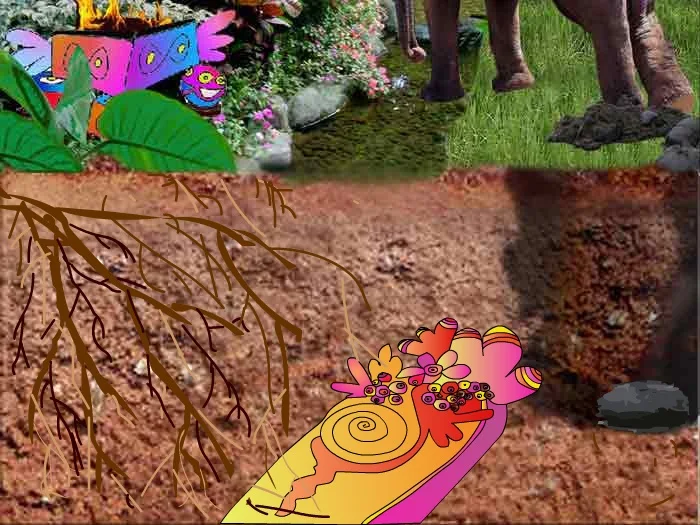
THE WORLDBY LIVING STRUCTURES
- The cities or living structures of the future – steder hvor alting lever I en meget ekklektisk harmoni – hvor diversitet er et integreret mantra, som er lige så naturligt som det er alle har elektricitet i dag…..
RITES / LEIFRIDES / RITERNE
- Nødvendigheden af at lave livsritualer – det der binder os sammen som menneske
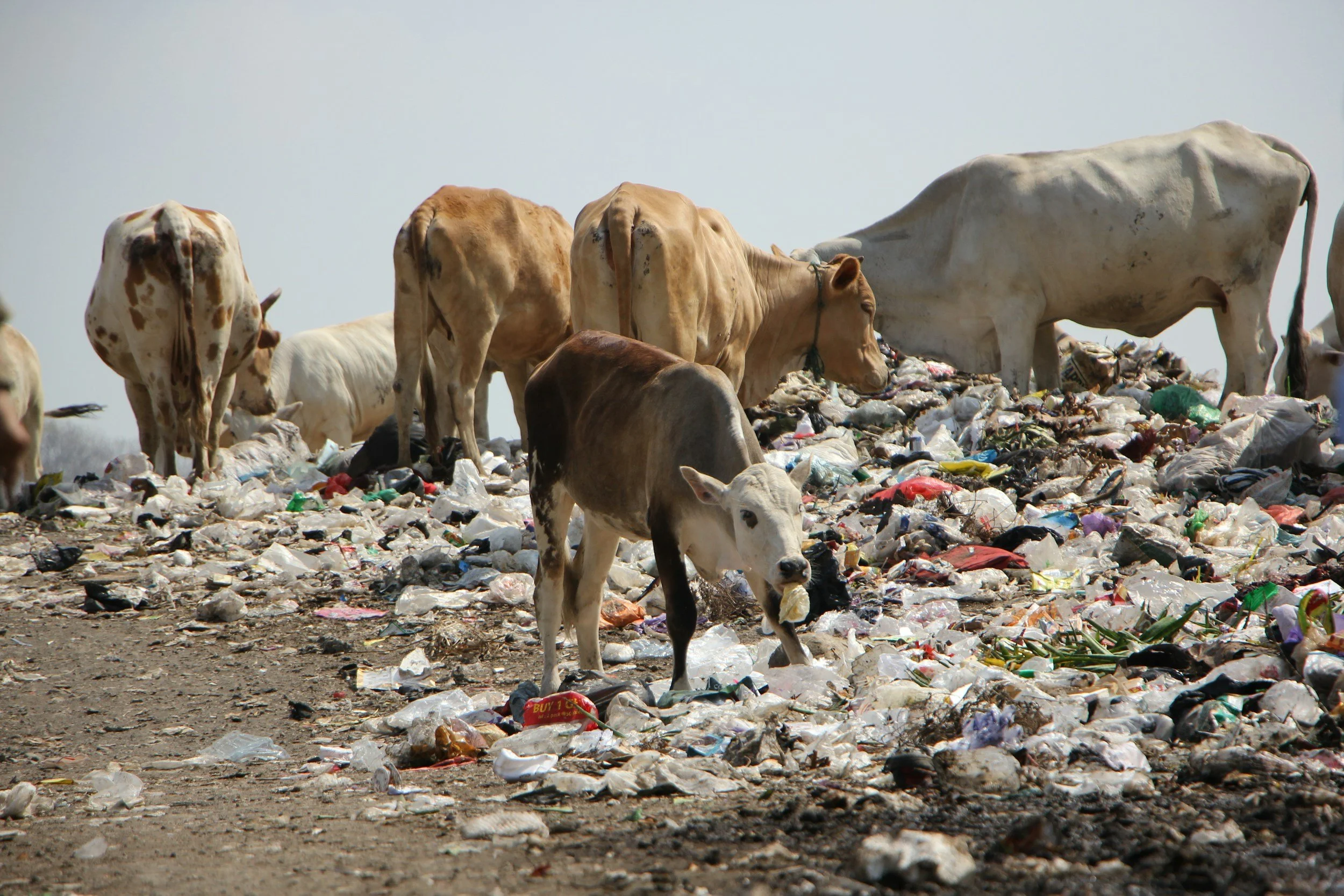
MORPHO on ressources versus waste
You said:
TELL ME WHERE THE NOTION "WASTE" / POUBELLE / ABFALLE / AFFALD etc. comes from - why (for what reason) does it appear in humans life / languages??
GDPRchat said:
The concept of waste—and the words we use to describe it (waste, poubelle, Abfall, affald, etc.)—emerged in human languages and societies as a result of cultural, economic, and technological shifts. Its appearance reflects how humans have historically interacted with materials, resources, and their environments. Here’s a deep dive into its origins and why it became a part of human life and language:
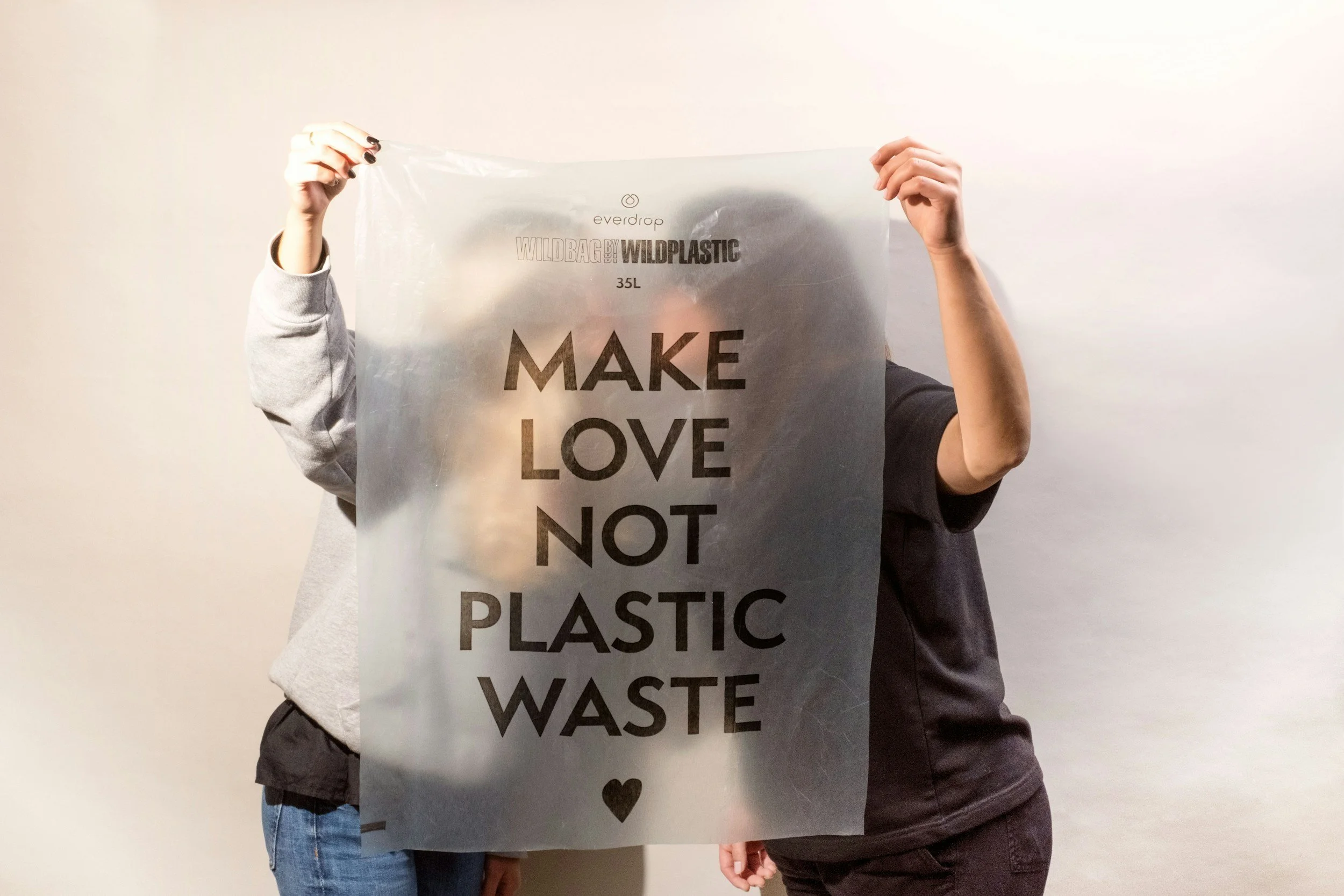
1. The Birth of Waste: A Historical Perspective
a) Prehistoric and Hunter-Gatherer Societies
In early human societies, waste as we know it barely existed. Hunter-gatherers lived in small, mobile groups and relied on natural materials that were biodegradable (e.g., animal bones, plant fibers, wood).
What wasn’t used was left to decompose or be reabsorbed by nature. There was no need for a concept of "waste" because everything had a purpose or was harmless to the environment.
Key point: Waste is a byproduct of sedentary living and material accumulation.
b) The Agricultural Revolution (10,000 BCE)
With the shift to agriculture and permanent settlements, humans began producing surplus food and goods. This led to:
Organic waste: Food scraps, animal manure, and plant debris accumulated in villages.
Non-biodegradable waste: Early ceramics, tools, and later metals (e.g., bronze, iron) introduced materials that didn’t decompose.
Sanitation problems: Concentrated waste in settlements led to disease and pollution, forcing communities to develop ways to manage it (e.g., digging pits, creating drainage systems).
Key point: Waste became a problem when humans started living in one place and accumulating more than they could immediately use or decompose.
c) Urbanization and the Rise of Cities (3000 BCE–500 CE)
As cities grew (e.g., Mesopotamia, ancient Egypt, Rome, Indus Valley), waste management became a critical issue. Cities like Rome had public latrines, sewers (e.g., the Cloaca Maxima), and even early "garbage collection" systems where waste was dumped outside city walls or into rivers.
Trade and commerce introduced new materials (e.g., glass, metals, textiles) that couldn’t be easily reused or decomposed.
Key point: Waste became institutionalized—governments had to create systems to deal with it, and the concept entered legal and cultural frameworks.

WORLDBY - a SENSUSTAINABLE living structure VISION by NPF - see more here
d) The Industrial Revolution (18th–19th Century)
The mass production of goods led to an explosion of waste. Factories produced non-biodegradable materials (e.g., plastics, synthetic chemicals) that couldn’t be easily absorbed by nature.
Consumer culture emerged, encouraging people to buy, use, and discard goods at an unprecedented rate.
Key point: Waste shifted from being a local nuisance to a global environmental problem. The word "waste" evolved to reflect this new reality.
2. The Etymology of "Waste" in Different Languages
The words for "waste" in European languages reflect their historical roots in Latin, Germanic, and Old French, as well as the cultural attitudes toward waste in each society. Here’s how some of these words originated:
a) English: "Waste"
Origin: From Old North French waster (to lay waste, destroy) and Latin vastare (to devastate, lay waste).
Original meaning: The word originally described destruction or desolation (e.g., "a wasted land"). It later evolved to mean unused or discarded materials.
Cultural context: The English word reflects the idea of abandonment or ruin, tying waste to neglect or excess.
b) French: "Poubelle"
Origin: The word poubelle (trash can) comes from Eugène Poubelle, a 19th-century French prefect who mandated the use of trash bins in Paris in 1884.
Original meaning: Before Poubelle’s decree, Parisians threw waste into the streets. His law required landlords to provide covered containers for waste, which were soon named after him.
Cultural context: The word poubelle reflects how policy and urbanization shaped the concept of waste. It also shows how waste became institutionalized—something to be contained and managed.
c) German: "Abfall"
Origin: From the verb abfallen (to fall off, decline). The prefix ab- means "off" or "away," and Fall means "fall."
Original meaning: The word originally described something that falls away or is left behind (e.g., fruit falling from a tree). It later came to mean discarded materials.
Cultural context: The German word reflects a practical, almost passive view of waste—something that is no longer useful and is "left behind."
d) Danish: "Affald"
Origin: From Old Norse af (off) and falla (to fall). Similar to German, it means "that which falls away."
Original meaning: Like Abfall, it originally described something that falls off or is discarded (e.g., leaves falling from a tree).
Cultural context: The Danish word emphasizes separation—waste is what is no longer part of the useful whole.
e) Latin: "Vastus" and "Residuum"
Vastus: Means "empty, desolate, immense." It gave rise to words like waste (English) and gâter (French, meaning "to spoil").
Residuum: Means "what remains behind," from re- (back) and sedere (to sit). It evolved into words like residual (English) and résidu (French).
Cultural context: Latin reflects the dual nature of waste—both destruction (vastus) and remnants (residuum).
SORT - paper mache, soot, black pigment & linoil - NPF
f) Other Languages
Spanish: Basura (from Basque baso, meaning "forest" or "wild place," where waste was historically dumped).
Italian: Rifiuti (from rifiutare, meaning "to refuse" or "reject").
Dutch: Afval (similar to German Abfall, meaning "that which falls away").
Swedish: Avfall (same root as Danish affald).
Russian: Мусор (Musor, from Old Church Slavonic mъsorъ, meaning "filth" or "dirt").
3. Why Did the Concept of Waste Appear in Human Life?
The idea of waste emerged as a result of three major shifts in human history:
a) Sedentary Living
When humans settled in one place, they accumulated more than they could use or decompose. Waste became a visible problem that required management.
b) Material Surplus
Agriculture and trade created surplus goods, leading to excess materials that had no immediate use. These materials were often discarded, creating waste.
c) Non-Biodegradable Materials
The invention of ceramics, metals, and later plastics introduced materials that didn’t decompose naturally. These materials piled up, forcing societies to develop ways to deal with them.
d) Urbanization and Density
Cities concentrated waste in small areas, leading to sanitation and health problems. Governments had to create systems to remove, contain, or repurpose waste.
e) Industrialization and Consumerism
Mass production and consumer culture normalized disposability. Waste shifted from being a local nuisance to a global environmental crisis.
4. Cultural Attitudes Toward Waste
The words for waste also reveal cultural attitudes toward it:
English and French: Reflect destruction and containment (e.g., waste, poubelle). Waste is seen as something to be controlled or hidden.
German and Danish: Reflect a practical, almost neutral view (e.g., Abfall, affald). Waste is simply what is no longer useful.
Latin: Reflects both destruction and remnants (e.g., vastus, residuum). Waste is both ruin and residue.
5. The Evolution of Waste: From Problem to Resource
Historically, waste was seen as a problem to be hidden or ignored. Today, the narrative is shifting:
Circular economy: Waste is now viewed as a resource that can be reused, recycled, or repurposed.
Sustainability movements: Efforts to reduce, reuse, and recycle are redefining waste as something valuable.
Technological innovations: Advances in recycling, upcycling, and waste-to-energy are transforming waste into raw materials.
6. Key Takeaways
Waste is a human invention: It emerged when humans settled, accumulated surplus, and created non-biodegradable materials.
Words reflect history: The etymology of waste, poubelle, Abfall, and affald reveals how different cultures perceived and managed waste.
Waste is tied to power: Governments and institutions (e.g., Eugène Poubelle) played a key role in defining and managing waste.
Waste is evolving: What was once seen as garbage is now being redefined as a resource in a circular economy.
7. Why Does This Matter Today?
Understanding the origins of waste helps us rethink our relationship with materials. If waste is a human invention, then we can reinvent it—or even eliminate it—by designing systems that mimic nature’s circularity. The shift from "waste as a problem" to "waste as a resource" is not just about technology; it’s about changing how we think, speak, and act - its MIND SHIFTING.